




Orthopedic Treatment vs Physical Therapy: Which One Should You Choose?
Body pain has become strangely normal in city life.
People ignore knee stiffness for months. Back pain gets blamed on long office hours. Shoulder discomfort is pushed aside until basic movement starts becoming difficult. And in Mumbai’s fast-moving routine, most people only seek help when the pain begins affecting everyday life.
That’s usually when the confusion starts.
Should you visit an orthopedic doctor first? Or should you directly begin physical therapy?
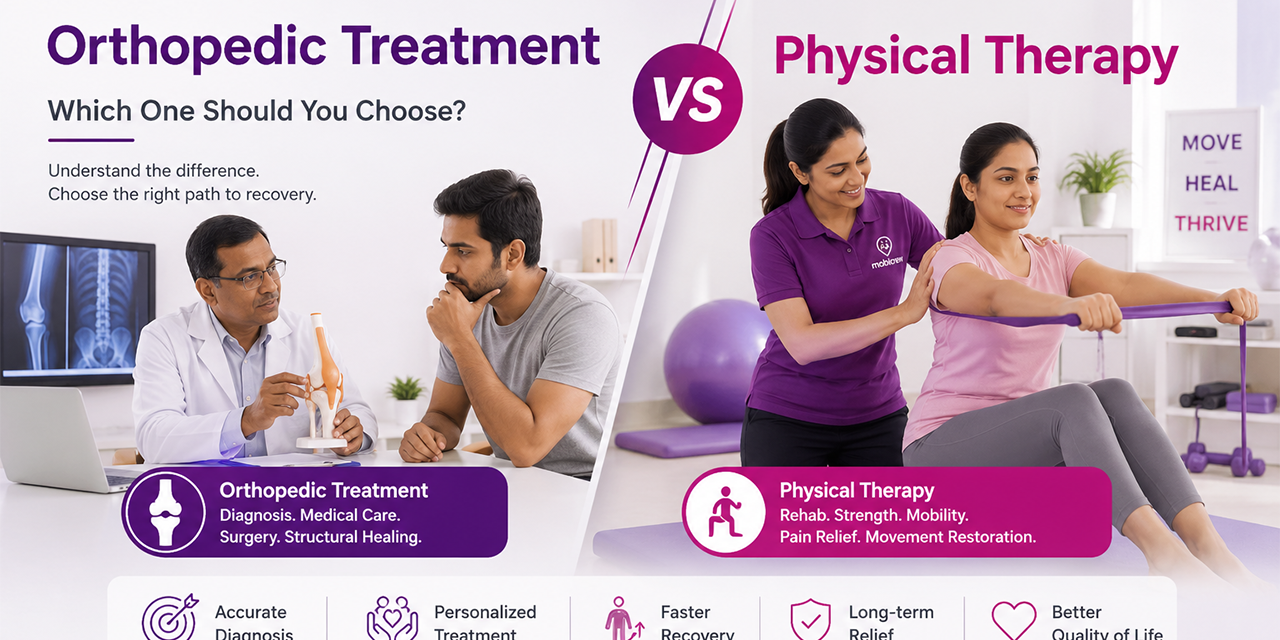
Many people assume both are the same thing, but they actually solve different parts of the problem.
Understanding the difference can save time, money, and in some cases, prevent long-term mobility issues altogether.
Orthopedic treatment focuses on diagnosis and structural problems
Orthopedic specialists deal with the bones, joints, ligaments, muscles, and overall musculoskeletal system.
Their role is usually to identify what is physically wrong inside the body.
This may include:
• Fractures
• Arthritis
• Ligament tears
• Joint degeneration
• Spine-related conditions
• Sports injuries
• Severe knee or shoulder pain
An orthopedic consultation often involves scans, X-rays, MRIs, medical diagnosis, and treatment planning.
Sometimes medication is enough. Sometimes injections are recommended. In more serious situations, surgery may become necessary.
In simple terms, orthopedic treatment focuses on identifying and medically treating the root structural issue.
Physical therapy focuses on movement and recovery
Physical therapy begins where pain starts interfering with movement.
Instead of focusing only on diagnosis, physical therapists work on:
• Restoring strength
• Improving flexibility
• Reducing stiffness
• Improving posture and balance
• Helping recovery after surgery or injury
• Reducing long-term pain through guided movement
For many people, physical therapy becomes the bridge between treatment and normal life.
For example:
A person may undergo orthopedic surgery successfully, but without proper rehabilitation afterward, walking confidently again may still feel difficult. That’s where therapy becomes essential.
The biggest misconception people have
Many patients believe physical therapy is only needed after surgery.
In reality, physical therapy is often recommended before surgery as well.
In several cases involving:
• Mild knee pain
• Early-stage arthritis
• Back pain
• Muscle weakness
• Posture-related discomfort
Doctors may first recommend conservative management through therapy before considering invasive procedures.
This approach has become increasingly common because movement-based recovery often improves long-term mobility naturally.
Mumbai’s lifestyle is quietly creating mobility problems
The city itself contributes heavily to physical strain.
Long commutes, poor posture during desk jobs, lack of movement, stress, and crowded travel conditions are affecting mobility earlier than before.
Even younger adults are now seeking treatment for:
• Neck stiffness
• Lower back pain
• Sports strain
• Postural imbalance
• Sedentary lifestyle injuries
At the same time, Mumbai’s ageing population is also dealing with:
• Joint degeneration
• Fall recovery
• Mobility decline
• Balance-related concerns
Because of this, the demand for quality rehabilitation and support services has grown rapidly.
Choosing between orthopedic care and therapy depends on the situation
The right choice depends on what the body is trying to communicate.
Sharp pain after injury, swelling, fractures, or severe joint instability usually require orthopedic evaluation first.
But stiffness, gradual discomfort, movement difficulty, posture issues, or recovery support often benefit greatly from physical therapy.
In many cases, both work together rather than against each other.
A good orthopedic doctor may recommend therapy. A good therapist may refer someone for orthopedic evaluation if deeper issues appear.
The best outcomes usually happen when treatment and rehabilitation are connected instead of isolated.
Recovery is not only medical anymore
One thing families increasingly realise is that recovery affects daily life far beyond the clinic.
Simple activities become difficult:
• Climbing stairs
• Travelling to appointments
• Managing hospital visits
• Walking outdoors safely
• Handling post-treatment movement
This is where mobility support services have become valuable alongside treatment itself.
MobiCrew helps bridge this practical gap by supporting people during recovery journeys through mobility products and trained support companions.
Whether someone needs assistance after orthopedic treatment, physiotherapy sessions, surgery recovery, or mobility support during appointments, having practical help available can reduce physical stress significantly.
You can explore MobiCrew mobility support solutions here:
https://mobicrew.com/products?&productCategory=1
The real goal is movement without fear
Most people don’t actually care whether the solution is labeled orthopedic treatment or physical therapy.
What they truly want is simple.
To walk comfortably again.
To move without hesitation.
To return to daily life without constantly thinking about pain.
That’s why recovery should never be viewed as a single appointment or a one-time procedure.
Real recovery happens gradually through treatment, movement, support, and consistency.
And in many cases, the best decision is not choosing one over the other.
It’s understanding when your body needs both.



Get more caregiving guidance like this
Add MobiCrew as a preferred source to see our latest eldercare and mobility articles first in Google.
Add as preferred source