




What Happens When an Elderly Parent Stops Going Out? The Hidden Cost of Staying Home
It usually starts with something small.
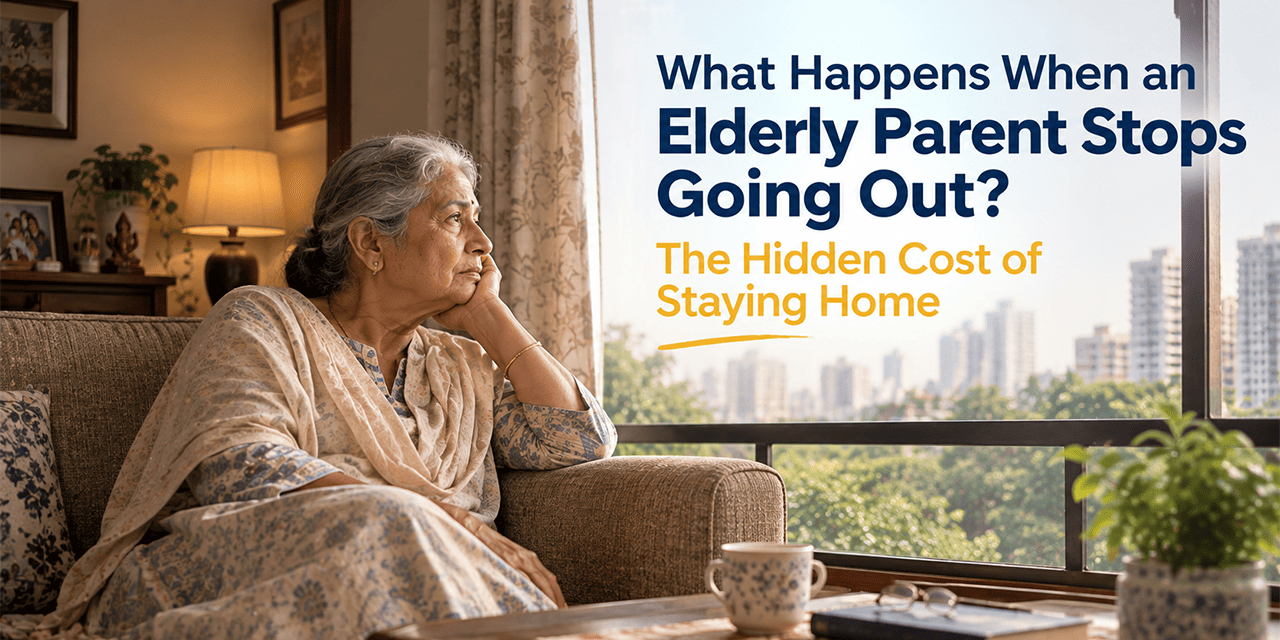
“It's too much effort.”
“I'll go next time.”
“Don't worry, you go. I'll stay home.”
At first, nobody thinks much of it. Maybe your parent has become slower on their feet, doesn't feel comfortable travelling alone, or simply finds getting in and out of a car increasingly difficult. The family starts helping where they can, and eventually outings become less frequent.
Then something interesting happens: staying home becomes the easier option.
A doctor’s appointment gets postponed. A visit to a friend doesn't happen. A family lunch is skipped. A parent who once enjoyed going to the market or taking an evening walk gradually stops asking altogether.
The problem isn't simply that they're going out less.
It's what can happen when their world starts getting smaller.
When inconvenience becomes isolation
For many elderly people, going outside isn't just about having somewhere to go. It's about maintaining everyday connections.
Meeting friends, visiting relatives, going shopping, attending religious or community events, sitting in a park or simply getting some fresh air can provide a sense of routine and connection.
When mobility becomes difficult, these ordinary activities can disappear surprisingly quickly.
The family may still be around. They may call every day. Someone may visit on the weekend.
But there's a difference between being cared for at home and being able to participate in the world outside it.
Confidence can disappear along with mobility
An elderly parent doesn't necessarily need to lose the physical ability to go somewhere before they stop going.
Sometimes, it's the fear of what might happen along the way.
What if there are too many stairs?
What if I can't get into the car?
What if I need to use the bathroom?
What if nobody is available to help me?
What if I slow everyone down?
After a few difficult experiences, someone may simply decide that going out isn't worth the trouble.
That can create a cycle: less movement - less confidence - fewer outings - even less movement.
This doesn't mean every elderly person needs to be encouraged to go out constantly. Their preferences and physical limitations matter. But when someone wants to go out and the main barrier is getting the practical support they need, that is a problem worth solving.
The family often becomes the solution
This is where many families find themselves stuck.
A daughter takes time off work to accompany her mother to an appointment. A son rearranges his schedule to take his father shopping. A relative helps with a wheelchair. Someone has to be available every time an outing comes up.
It works, until it doesn't.
Everyone has jobs, children, responsibilities and their own schedules. Eventually, the elderly parent may stop asking for help because they don't want to inconvenience anyone.
And that's when “I'll stay home” becomes the default answer.
Independence doesn't always mean doing everything alone
There's an important distinction between independence and doing everything without help.
An elderly person can remain independent while receiving assistance with the parts of an outing that have become difficult.
They can decide where they want to go.
They can decide when they want to leave.
They can enjoy the appointment, shopping trip, family gathering or park visit.
They simply have someone available to help with the mobility and practical parts of getting there and moving around safely.
The goal isn't to take over. It's to make participation possible.
Sometimes, four hours can change the entire outing
A support companion can help an elderly person with an appointment, shopping trip, social visit or other outing when family members aren't available to accompany them.
For families in Mumbai, services such as MobiCrew provide trained support companions who can assist with mobility and practical support during outings.
That doesn't replace family.
It simply means an elderly parent doesn't always have to choose between staying home and waiting for someone in the family to become available.
The hidden cost isn't measured in rupees
The real cost of staying home isn't always obvious.
It's the birthday they didn't attend.
The friend they stopped meeting.
The market they no longer visit.
The appointment they kept postponing.
The family outing they decided was “too much trouble.”
Sometimes, giving an elderly parent more independence isn't about giving them more things.
It's about helping them keep doing the things they already enjoy.
Because growing older should not automatically mean your world has to become smaller.
Related
-
Mumbai Monsoon and Mobility- How to Stay Out and About
-

The Ultimate Guide to Wheelchair-Accessible Malls in Mumbai
-
Physical Therapy Clinic Mumbai: Personalized Rehabilitation Plans for Every Age
-
Redefining Urban Mobility: The Rise of Accessible Transportation
-

Saying Yes More Often: How Reliable Mobility Support Changes Daily Life
Get more caregiving guidance like this
Add MobiCrew as a preferred source to see our latest eldercare and mobility articles first in Google.
Add as preferred source