




Why Accessibility Isn't Just About Ramps Anymore
Accessibility used to mean one thing.
A ramp near the entrance.
Maybe an elevator inside the building.
Sometimes a wheelchair symbol painted somewhere near the parking lot.
But cities are changing. People are speaking up more openly about mobility, inclusion, and independence. And slowly, society is beginning to understand something important:
Real accessibility is not just about entering a space anymore.
It’s about being able to fully participate in life once you get there.
Why Accessibility Feels Different Today
For years, accessibility conversations focused mainly on physical infrastructure.
Can a wheelchair enter the building?
Is there a lift available?
Are there handrails?
Those things still matter deeply. But today, accessibility goes far beyond construction design.
Because even an accessible building can feel inaccessible if:
• Transport is stressful
• Navigation is confusing
• Crowds feel unsafe
• Long walking distances become exhausting
• Assistance is unavailable
• Social environments feel isolating
True accessibility now includes comfort, confidence, dignity, and independence.
And that shift is becoming increasingly visible across cities like Mumbai.
Mumbai Is Slowly Becoming More Inclusive
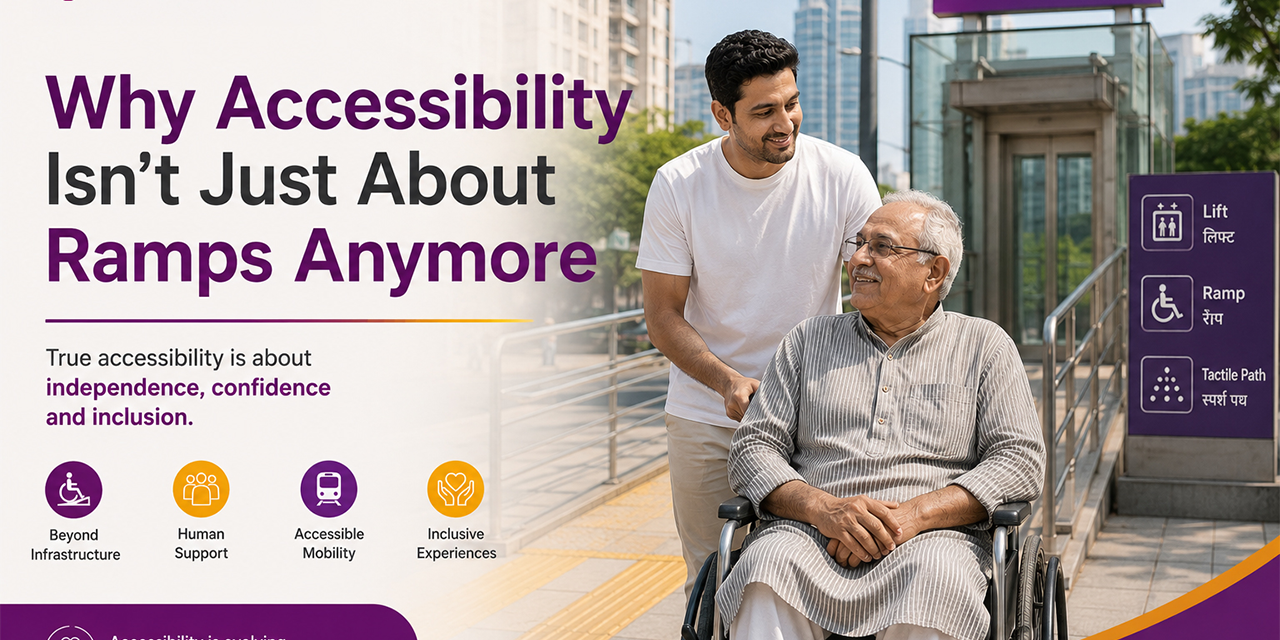
Over the last few years, Mumbai has seen meaningful improvements in public accessibility.
Metro stations now include:
• Elevators
• Ramps
• Tactile pathways
• Wheelchair-accessible entry points
• Better platform navigation
Airports and malls have also become more mobility-friendly compared to a decade ago.
For many people with disabilities, elderly individuals, and those recovering from surgeries or injuries, these developments represent something powerful.
Freedom to move independently
Freedom to participate socially
Freedom to stop planning life entirely around physical limitations
But infrastructure alone still doesn’t solve everything.
Because accessibility in the real world is emotional too.
The Invisible Side of Accessibility
One thing people often overlook is the mental fatigue attached to mobility challenges.
Many individuals constantly calculate things before leaving home:
• How crowded will the place be?
• Will someone help if needed?
• What if I get tired midway?
• Is transportation manageable?
• Will people stare?
• What happens if something becomes difficult unexpectedly?
That emotional layer affects confidence more than people realise.
Sometimes, the barrier is not the staircase.
It’s the anxiety attached to navigating the day alone.
And this is where modern support services are becoming part of accessibility itself.
Accessibility Now Includes Human Support
The idea of support has evolved dramatically.
Earlier, assistance was associated mostly with hospitals or medical emergencies.
Today, support systems are helping people live more actively outside medical spaces too.
This may include:
• Travel companionship
• Mobility support during outings
• Assistance navigating public spaces
• Help attending events or appointments
• Support for elderly family members
• Confidence during independent travel
In many ways, accessibility has become more human-centered.
Not just “Can someone enter this space?”
But “Can someone comfortably experience this space?”
That difference matters.
Why Everyday Freedom Matters
For many people, accessibility is not about grand moments.
It’s about ordinary ones.
• Going to a park.
• Meeting friends.
• Attending a family gathering.
• Travelling by metro independently.
• Sitting at a café comfortably.
• Watching a movie without stress.
These experiences shape emotional well-being and social connection.
And when mobility barriers slowly reduce participation in daily life, isolation often follows quietly.
That’s why accessible support systems matter so much today.
They help people stay connected to the world around them.
How MobiCrew Fits Into Modern Accessibility
This is exactly where services like Mobicrew are changing the conversation around mobility and support.
MobiCrew focuses on practical everyday assistance through trained support companions and mobility solutions designed around real urban life.
People use MobiCrew for:
• Mobility assistance across the city
• Elderly companionship
• Support during travel and outings
• Hospital visits
• Assistance for wheelchair users
• Recovery and rehabilitation support
The goal is not simply caregiving.
It’s helping people participate in life more confidently and independently.
You can explore MobiCrew mobility support solutions here:
https://mobicrew.com/products?&productCategory=1
Accessibility Should Feel Natural
The future of accessibility is not only about special facilities.
It’s about creating cities, services, and experiences where people with different mobility needs feel naturally included without constantly needing to “prepare” for basic movement.
And that future is already beginning.
Because accessibility today is no longer just about ramps.
It’s about making everyday life feel possible again.
Related
Get more caregiving guidance like this
Add MobiCrew as a preferred source to see our latest eldercare and mobility articles first in Google.
Add as preferred source