




Daily Responsibilities of an Elder Caretaker: What Families Should Know
Most families hire an elder caretaker without a clear picture of what the role actually involves day to day. It's easy to assume it means simply "being there," but the job is more specific than that, and knowing what it actually covers helps families set the right expectations from the start.
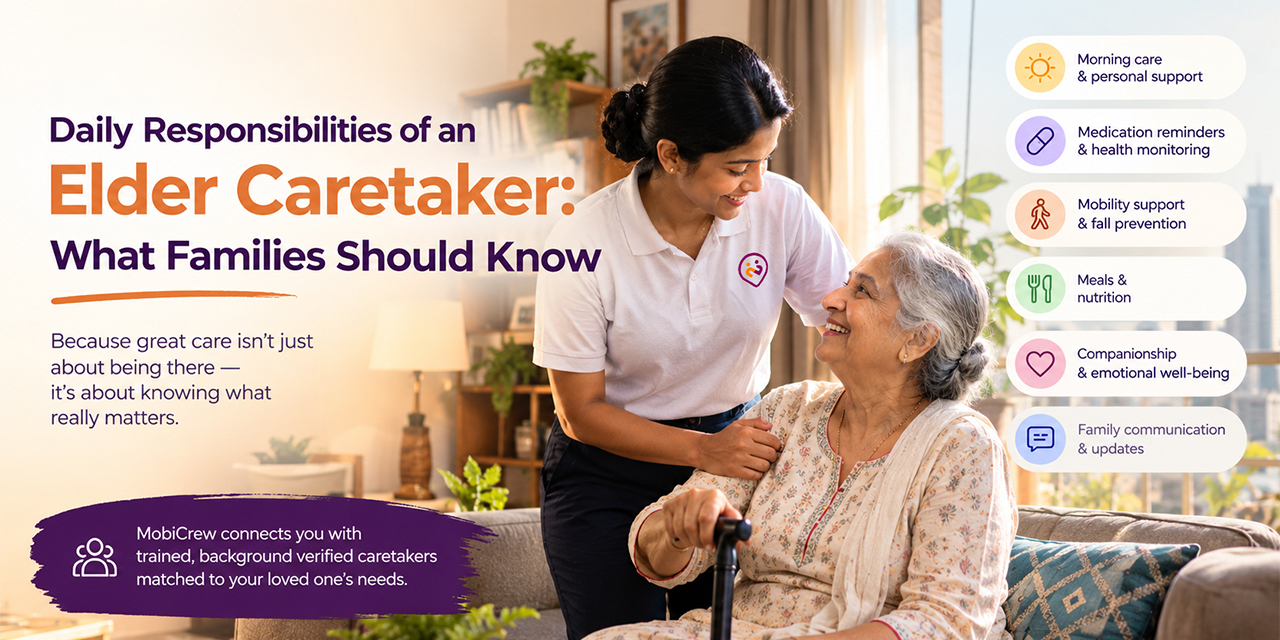
Morning routines and personal care
The day usually begins with helping a parent get up safely, assisting with washing, dressing, and grooming if mobility or strength makes these tasks harder than they used to be. This isn't just physical support, it's often the first real interaction of the day, and a good elder care taker in Mumbai treats it that way, unhurried and respectful, not rushed through like a checklist.
Medication reminders and basic monitoring
Most elderly parents are managing at least one ongoing prescription, often several with different timings. A caretaker's job includes making sure medication is taken correctly and on schedule, and noticing anything that seems off, unusual fatigue, changes in appetite, or symptoms worth mentioning to a doctor. This isn't clinical care, but it is consistent attention that catches small issues before they become bigger ones.
Mobility support throughout the day
Helping someone move safely, whether that's walking to another room, getting in and out of a chair, or simply standing without losing balance, is one of the most physically demanding parts of the role. Falls remain one of the most common risks for elderly people at home, and a caretaker's presence during the exact hours these movements happen is often what prevents a minor stumble from becoming a serious injury.
Meals and nutrition
While not always full cooking duties, many caretakers help plan and serve meals appropriate to a parent's dietary needs, and just as importantly, make sure meals actually happen on schedule rather than getting skipped because no one was around to prepare or serve them.
Companionship that isn't an afterthought
The best elder care services in Mumbai treat companionship as a real part of the job, not a bonus. Conversation, shared activities, simply being present during long stretches of the day, this matters as much for a parent's mental wellbeing as any physical task on the list. Isolation is a genuine risk for elderly people living alone, and a caretaker's presence directly addresses that.
Communication with the family
A good caretaker keeps the family informed, not with alarming daily reports, but with honest, regular updates on how things are actually going. This becomes especially important when family members live in a different part of the city or aren't able to visit as often as they'd like. A quick message about how the day went, or a heads up about something worth watching, does more to ease a family's worry than any amount of assuming everything is fine.
What a caretaker typically doesn't do
It's worth being clear that most elder caretakers are not medical professionals. Tasks like administering injections, managing wound care, or making clinical decisions usually fall outside the role and need a nurse or doctor instead. A good caretaker knows exactly where that line is and doesn't try to cross it, and a good caregiver service in Mumbai will be upfront about this distinction rather than letting families assume more coverage than is actually being provided.
How responsibilities shift over time
What a caretaker does on day one often isn't exactly what they're doing six months later. A parent's needs tend to change gradually, sometimes needing more mobility support, sometimes less. Families who check in periodically about whether the current arrangement still fits tend to catch these shifts early, rather than realising months later that the support in place no longer matches what's actually needed.
Setting expectations early makes the arrangement work
Families who take the time to discuss these responsibilities upfront, rather than assuming a caretaker will simply figure it out, tend to have a smoother experience overall. It also helps the caretaker themselves understand exactly what's expected, rather than guessing at the boundaries of the role from day one.
MobiCrew connects Mumbai families with trained, background verified caretakers matched to the specific daily support a parent actually needs, not a generic version of care that looks the same for every household.
Related
-

Tips to Choose the Right Physical Therapist for Your Needs
-
5 Wheelchair Friendly Places in Mumbai You Didn't Know About
-

Best Mobility Solutions Provider in Mumbai for Wheelchair & Patient Transport Services
-

How to Choose the Right Health Service Provider for Your Needs
-

The Future of In-Home Care: How Apps Are Making Elderly Care More Accessible
Get more caregiving guidance like this
Add MobiCrew as a preferred source to see our latest eldercare and mobility articles first in Google.
Add as preferred source