




Safety Features to Look for in a Folding Electric Wheelchair
A folding electric wheelchair can make everyday journeys easier, whether someone is moving around their home, visiting a doctor, or travelling across Mumbai. But portability should never come at the cost of safety. A chair that folds neatly into a car boot still needs to stop reliably, remain stable on uneven ground and support its user comfortably.
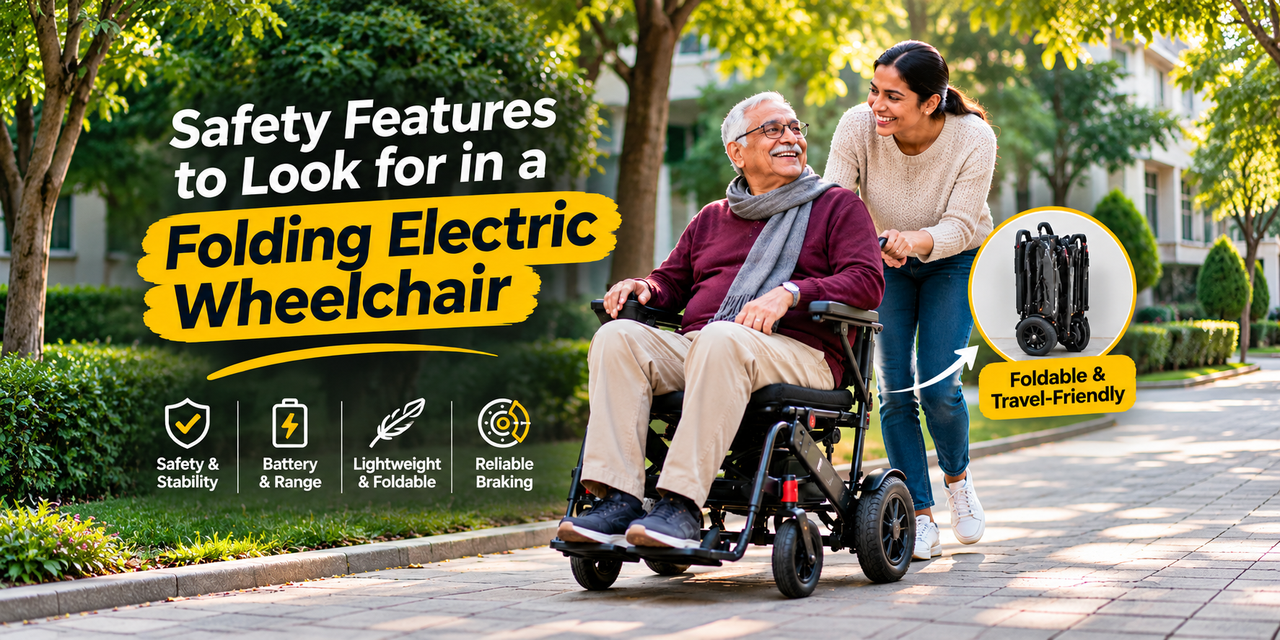
Before buying, look beyond photographs and advertised range. The right safety features depend on the person's weight, posture, strength, daily routes and whether a family member will help with transport.
1. Reliable brakes and a safe stopping system
Ask how the wheelchair stops when the joystick is released. Many powered wheelchairs use electromagnetic brakes that engage automatically when the user lets go of the control, but specifications vary. Confirm how the brakes behave on slopes, during a power interruption and when the chair is switched to manual push mode.Test stopping at a low speed in a safe, open space. The wheelchair should respond predictably rather than jerk or roll. Also check whether a caregiver can operate the manual release without accidentally leaving the chair free to move.
2. Anti-tip protection and a stable wheelbase
Mumbai's pavements, building entrances and parking areas are not always perfectly level. Anti-tip wheels, appropriate wheel spacing and a well-designed centre of gravity can help reduce the risk of tipping, particularly when turning or approaching a small incline.Do not assume every folding chair is safe for steep ramps. Ask the seller for the manufacturer's maximum safe slope rating and operating instructions. Never test an unfamiliar incline with a passenger until the limits are understood.
3. Strong frame and secure folding locks
A folding mechanism is convenient only if it locks securely into its operating position. Inspect hinges, locking pins and joints for looseness. The chair should not flex excessively or partially fold when occupied.Check the manufacturer's maximum user weight, including bags and other items carried on the chair. Choose a capacity with reasonable headroom rather than treating the stated limit as a daily target. A lightweight frame is useful, but build quality and durability matter more than a few kilograms saved.
4. Battery safety and clear charge indicators
Battery reliability is central to safe travel. Look for a clearly visible battery-level indicator, appropriate low-charge warnings and a charger approved for the specific model. Ask about battery protection features and the manufacturer's charging and storage guidance.Lithium-ion batteries require careful handling. Avoid damaged batteries, incompatible chargers and charging near excessive heat or moisture. If you plan to fly, check the airline's current mobility-aid battery rules well before departure; acceptance depends on battery specifications and airline procedures.
5. Joystick controls that suit the user
A sensitive joystick can be difficult for someone with tremors, reduced hand strength or limited coordination. Try the control with the intended user before purchasing. Speed settings should be easy to adjust, and the chair should turn smoothly without sudden acceleration.Ask whether the joystick can be mounted on the left or right side. A clear power switch and an accessible emergency stop or equivalent shutdown procedure are also worth understanding. A caregiver should know how to safely intervene if the user becomes uncomfortable.
6. Comfortable seating and proper support
Safety includes posture. A seat that is too narrow, too deep or poorly supported can lead to fatigue, sliding and pressure discomfort. Check the seat dimensions, cushion, backrest, armrests and footrests. A qualified clinician or wheelchair seating specialist can help when the user has complex positioning needs.Seat belts or positioning straps should be used only as instructed for that chair and the user's needs. They do not make a wheelchair safe to use as a vehicle seat unless the chair and transport system are specifically approved for that purpose.
7. Wheels, tyres and ground clearance
Wheel size and tyre type affect grip, comfort and handling. Small wheels may struggle with broken pavement, drainage gaps or threshold edges. Ask whether the tyres are puncture-resistant, whether replacement parts are readily available and what maintenance is required.Ground clearance is equally important. A wheelchair that works beautifully on smooth showroom floors may scrape on the entrance lip of an older building. Test the chair on realistic surfaces where the manufacturer permits it.
8. Visibility and caregiver-friendly features
Reflectors, lights or high-visibility accessories may help others notice a wheelchair in dim corridors or evening conditions. For assisted travel, check that push handles are secure and that the chair's freewheel mode is clearly labelled.If a caregiver regularly lifts the folded chair into a vehicle, confirm its actual lifting weight, including removable batteries. A chair that is too heavy to lift safely can create a different kind of injury risk.
A practical pre-purchase test in Mumbai
Before making a decision, arrange a demonstration with the person who will use the wheelchair. Measure home doorways and lift dimensions. Check the building entrance, nearby pavements and the vehicle boot. Ask the supplier to show the complete fold-and-unfold process, charging routine, brake operation and manual push mode.Also request written warranty terms, servicing contacts, battery replacement information and an owner's manual. A dependable local service option is valuable when the wheelchair is part of someone's daily independence.
The best folding electric wheelchair is not necessarily the lightest or the most expensive. It is the one that fits the user, handles their real environment and can be operated confidently by everyone involved.
Related
-

The Role of Home Care Providers in Improving Seniors’ Quality of Life
-

Sports Rehabilitation Guide: Treatments, Recovery Tips, and Injury Prevention
-

24/7 Health Service Providers in Mumbai: Emergency Care When You Need It
-

Why Folding Electric Wheelchairs Are Ideal for Travel and Urban Living
-

Best Home Help Care Services in Mumbai for Elderly Support
Frequently asked questions

They can be, provided the chair fits the user, is operated within the manufacturer's limits and the person can control it safely. A hands-on assessment is especially useful when balance, cognition or hand coordination is a concern.
Many models have electromagnetic braking, but not all designs work identically. Verify the exact model's braking behaviour and manual release instructions before buying.
Use depends on the chair's specifications and local conditions. Busy roads, potholes, steep ramps and uneven surfaces can be hazardous. Prefer accessible, predictable routes and follow the manufacturer's terrain limits.
Sometimes. Airlines have specific requirements for powered mobility aids and batteries. Contact the airline in advance with the chair model, battery chemistry and watt-hour details.
Test the brakes, joystick response, turning radius, seating comfort, folding locks, battery indicator and manoeuvrability through realistic doorways and surfaces. Ask about warranty and service support too.
Editorial note: Product-specific safety limits and features must be checked against the manufacturer's manual. This article provides general buying guidance, not medical or engineering certification.
Get more caregiving guidance like this
Add MobiCrew as a preferred source to see our latest eldercare and mobility articles first in Google.
Add as preferred source