




Building an Inclusive Society: Simple Ways to Help People with Disabilities
India has over 26 million people living with disabilities, and in a city like Mumbai, the gap between what inclusion looks like in theory and what people with disabilities actually experience every day is still very real. Crowded footpaths, inaccessible buildings, poorly maintained ramps, and a general lack of awareness make everyday life significantly harder than it needs to be.
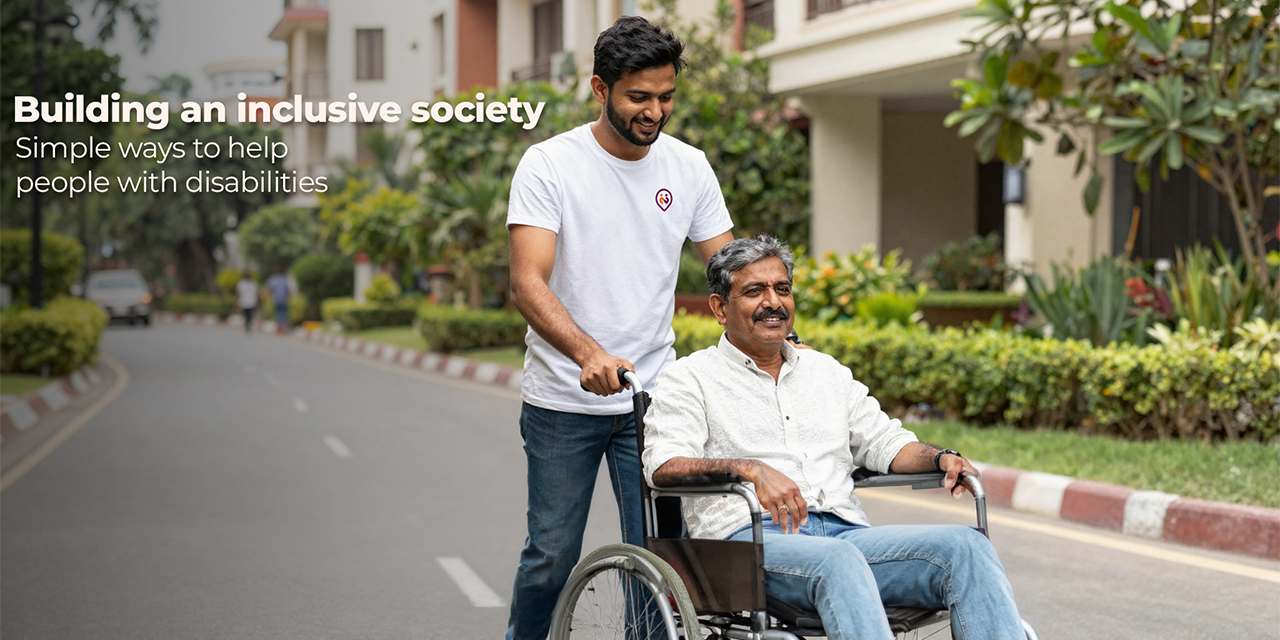
But building an inclusive society doesn't start with large policy changes. It starts with people — and the small, consistent choices they make every day.
What Does It Mean to Build an Inclusive Society for People with Disabilities?
An inclusive society is one where people with disabilities can participate fully in public life — education, employment, healthcare, social events, and daily errands — without facing unnecessary barriers. It means accessible infrastructure, respectful attitudes, and services that are designed with everyone in mind, not just the majority.
In Mumbai, this is a work in progress. But progress is possible, and individuals have more power to contribute to it than most realise.
How Individuals Can Help Make Public Spaces More Accessible
Accessibility in public spaces is often blocked by careless behaviour rather than absent infrastructure. Simple changes in how people use shared spaces make a real difference:
- Don't park vehicles on ramps or footpaths — these are essential routes for wheelchair users and people with walking aids.
- Use priority seating on public transport only when you need it.
- Keep building lifts clear and functional — avoid using them for goods or storage during peak hours.
- When you notice an accessibility barrier at a business or public space, report it or speak up.
Beyond physical spaces, how we communicate matters too. Speak directly to a person with a disability, not to their companion. Ask before offering help — unsolicited assistance can feel patronising. Never touch someone's wheelchair or mobility aid without permission.
The National Centre for Promotion of Employment for Disabled People (https://www.ncpedp.org) offers excellent resources on disability etiquette and awareness for individuals and organisations across India.
Why Accessibility Is Important for People with Disabilities
Accessibility is not a privilege — it is a right. The Rights of Persons with Disabilities Act 2016 (https://disabilityaffairs.gov.in/content/page/acts.php) mandates accessible infrastructure across public buildings, transport, and services in India. When accessibility fails, people with disabilities are forced to choose between safety and participation — and that is not a choice anyone should have to make.
For senior citizens and their families, accessibility directly affects quality of life. A step without a ramp, a lift that doesn't work, a footpath that can't be navigated with a walker — each of these is a barrier that keeps someone at home when they want to be out in the world.
What Are the Best Ways to Support Someone with a Physical Disability?
The most meaningful support is the kind that respects the person's independence and choices:
- Offer help, but follow their lead on whether and how they want it.
- Learn basic disability etiquette — it makes interactions more comfortable for everyone.
- Support disability-led organisations in Mumbai like Adapt India (https://www.adaptindia.org) and NAB India (https://nabindia.org).
- Choose and recommend accessible venues for events and gatherings.
- Advocate for accessibility improvements in your building, workplace, and neighbourhood.
How Mobility Assistance Services Improve Independence for People with Disabilities
For individuals with physical disabilities, having reliable mobility support transforms what daily life looks like. The ability to get to a doctor's appointment, attend a family event, go to work, or simply step outside — these are things most people take for granted. For someone with limited mobility, they often require significant planning, physical effort, and dependence on others.
This is where professional mobility assistance makes a genuine difference. MobiCrew provides trained support companions and wheelchair-accessible transport across Mumbai, helping people with disabilities and elderly individuals move through the city safely and independently.
- Book a trained mobility companion: https://mobicrew.com/mobility-booking
- Explore wheelchair-accessible transport: https://mobicrew.com/both-form/others
- Browse mobility aids and products: https://mobicrew.com/products/
Inclusion Is Built One Choice at a Time
An inclusive Mumbai will be built through thousands of small decisions made by individuals, businesses, and communities every single day. Most of those decisions are simple. They cost nothing. They just require awareness, intention, and a genuine willingness to make space for everyone.
Frequently Asked Questions
1. What does it mean to build an inclusive society for people with disabilities?
It means creating a world where people with disabilities can participate fully in public life without unnecessary barriers — through accessible infrastructure, respectful attitudes, and services designed for everyone.
2. How can individuals help make public spaces more accessible?
By not blocking ramps or lifts, using priority seating only when needed, learning disability etiquette, and speaking up when accessibility barriers exist in public or commercial spaces.
3. Why is accessibility important for people with disabilities?
Accessibility is a legal right under India's RPwD Act 2016 and directly impacts the ability of people with disabilities to live independently, safely, and with dignity.
4. What are the best ways to support someone with a physical disability?
Offer help respectfully, follow their lead, learn basic disability etiquette, support disability organisations, and choose accessible venues and services.
5. How do mobility assistance services improve independence for people with disabilities?
They remove the logistical barriers to going out — providing trained companions and accessible transport so people with disabilities can move through daily life without depending entirely on family members or facing the city alone.
Related
-
Freedom on Wheels: The Importance of Accessible Mobility for Seniors in India
-
Mumbai Monsoon and Mobility- How to Stay Out and About
-
Tips to Choose the Right Physical Therapist for Your Needs
-
How to Choose the Right Caretaker Agency in Mumbai
-
From Home to Events - How MobiCrew Helped Make Big Mumbai Experiences Truly Accessible