




Sport Rehabilitation Success Stories: Real Recovery Journeys
Behind every sports injury is a person who had to stop. Stop training, stop competing, stop doing the thing that gave them energy and identity. And behind every successful recovery is a story that most people never hear — because rehabilitation is quiet, unglamorous, and slow.
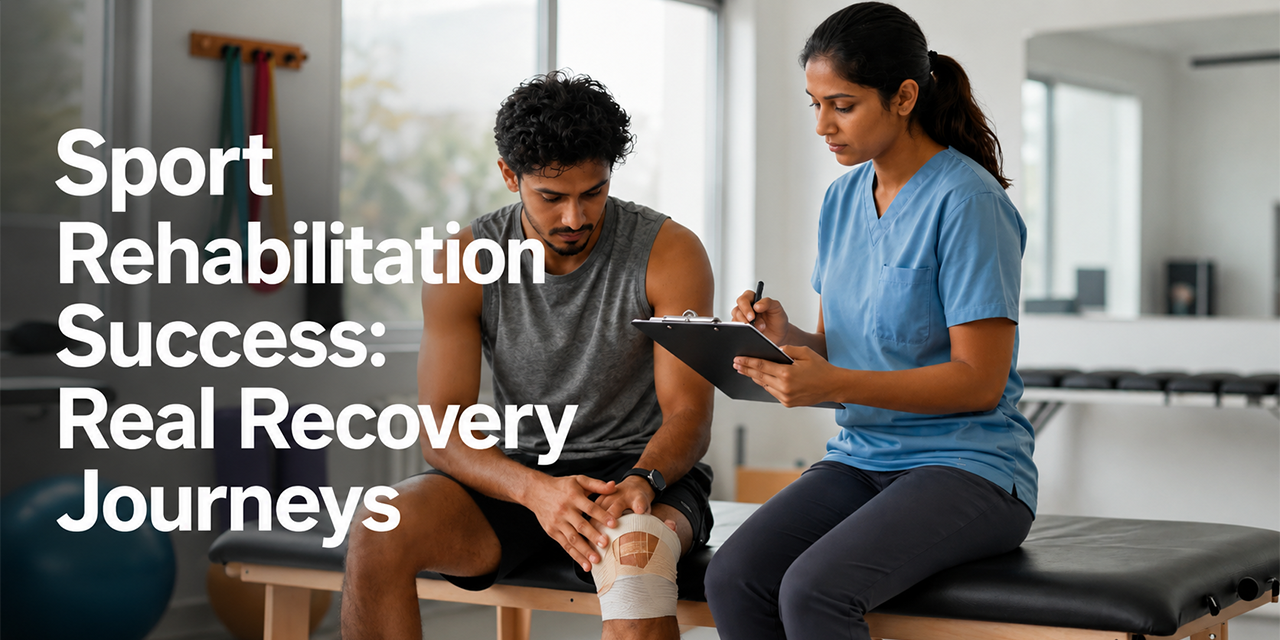
But those stories matter. They matter to the person currently six weeks into recovery and wondering whether they'll ever feel normal again. They matter to the family watching someone they love struggle with pain, frustration, and the uncertainty of not knowing when things will turn around.
This is about those stories. Real recovery journeys from sport rehabilitation in Mumbai — and what they teach us about what recovery actually takes.
The Cricket Player Who Almost Quit
Rahul was 24, playing club cricket in Thane, when he tore his ACL during a match. He'd heard the horror stories — twelve months off, surgery, the possibility of never playing at the same level again. His first instinct was to push through. His second, after the swelling didn't go down after two weeks, was to see a doctor.
The diagnosis came with two options: surgical reconstruction or conservative rehabilitation, depending on the severity and his goals. He chose surgery, followed by a structured six-month rehabilitation programme with a sports physiotherapist in Mumbai.
What he didn't expect was how hard the mental side would be. "The physical pain was manageable," he said. "What was harder was watching my teammates play while I was doing leg raises in a physio clinic."
He returned to play at the eight-month mark. Not because he rushed — but because he didn't. Every stage of his rehabilitation protocol was completed before the next one began. He's now playing at a higher level than before the injury, with better movement mechanics and a much clearer understanding of his body.
The Runner Who Learned to Listen
Priya had been running for three years when stress fractures in both shins forced her off the road entirely. She'd been increasing her mileage too quickly — a classic overuse pattern that sports physiotherapists across Mumbai see regularly.
Her rehabilitation wasn't dramatic. It was methodical. Six weeks of complete rest, followed by pool running, then gradual reintroduction of impact. Her physiotherapist at a Reliva clinic in Mumbai (https://reliva.in/physiotherapist-in-mumbai/sports-injury/) designed a return-to-running programme that rebuilt her base from scratch — along with strength training for her glutes and hips that addressed the biomechanical weaknesses that had caused the fractures in the first place.
The result was a runner who came back slower initially, then faster than she'd ever been. Her first half-marathon after recovery was a personal best.
What these stories have in common is not the injury. It's the approach.
The Gym Trainer with a Rotator Cuff Tear
Vikram was 31 and training clients five days a week when shoulder pain that he'd been ignoring for months became impossible to work through. An MRI confirmed a partial rotator cuff tear — the kind that doesn't necessarily require surgery but absolutely requires structured rehabilitation.
He was referred to a sports physiotherapy team and spent four months on a progressive strengthening programme targeting the rotator cuff, scapular stabilisers, and thoracic spine. The work was precise, unglamorous, and required him to reduce his own training load significantly during the programme.
He returned to full training at month five. More importantly, he changed how he coached his clients — incorporating mobility work and load management principles that he'd learned the hard way himself.
What Good Sport Rehabilitation in Mumbai Actually Looks Like
Sports medicine in Mumbai involves multidisciplinary teams including certified sports medicine physiotherapists, orthopaedic surgeons, nutritionists, and sports psychologists — offering a comprehensive approach to injury treatment, rehabilitation, and prevention. The best rehabilitation programmes in the city combine clinical expertise with honest, individualised timelines that respect the biology of healing rather than rushing it.
Key facilities offering sport rehabilitation in Mumbai include Nanavati Max Hospital (https://www.nanavatimaxhospital.org/our-specialities/sports-injury), Bombay Hospital (https://www.bombayhospital.com/services/sports-injury), Reliva Physiotherapy (https://reliva.in/physiotherapist-in-mumbai/sports-injury/), and Activ Insight in Dadar and Kharghar (https://activinsight.in/what-we-treat/return-to-play).
The common thread across all of them: recovery timelines are individual, not generic, and the athletes who respect that come back better.
How MobiCrew Supports the Recovery Journey
Rehabilitation requires consistency. And consistency requires getting to appointments — which, for someone with limited mobility during recovery, can be genuinely difficult in Mumbai's traffic and terrain.
MobiCrew provides mobility companions and accessible transport across Mumbai, helping injured individuals get to and from physiotherapy sessions, hospital follow-ups, and diagnostic appointments reliably. Because missing appointments delays recovery, and delays compound over time.
- Book transport and mobility support for rehabilitation: https://mobicrew.com/mobility-booking
- Explore mobility aids for home recovery: https://mobicrew.com/products/
- Book wheelchair-accessible transport: https://mobicrew.com/both-form/others
Recovery Is Not Linear — But It Is Possible
Every recovery story has a middle section that no one talks about enough. The weeks where progress stalls, where pain comes back unexpectedly, where the end point feels further away than it did at the beginning.
That's normal. That's rehabilitation. And the people who come out the other side — stronger, more aware of their bodies, and more capable than before — are the ones who stayed consistent through that middle section.
If you're in the middle of yours right now, keep going.
Related
-
Old Age Home vs. Home Care in Mumbai: The Real Cost Comparison Nobody Talks About
-

How Digital Healthcare Platforms Connect Patients With Care Providers
-

Trusted Carers for the Elderly in Mumbai: Compassionate Care at Home
-

Top Mistakes to Avoid When Hiring Home Care Providers
-

Eldercare Services Benefits: How Families Save Time and Reduce Stress
Get more caregiving guidance like this
Add MobiCrew as a preferred source to see our latest eldercare and mobility articles first in Google.
Add as preferred source