




How to Prevent Falls at Home: A Safety Checklist for Elderly Parents in India
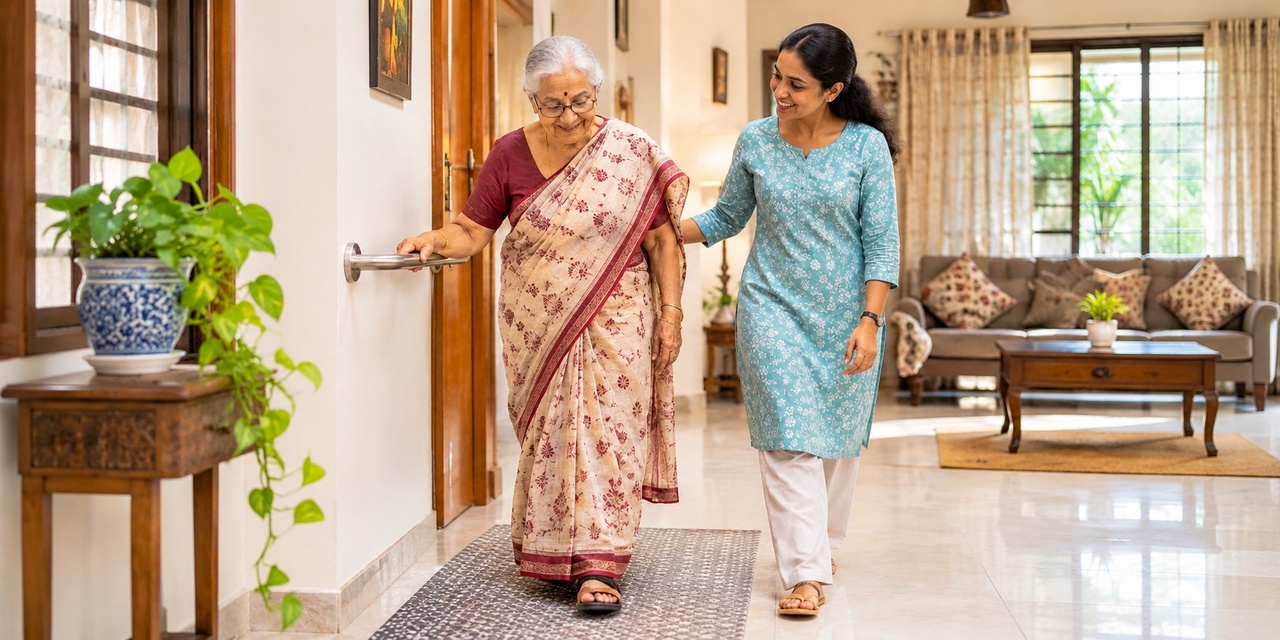
A familiar home can still present unexpected hazards for an older adult. A slippery bathroom floor, loose electrical wire or poorly lit staircase may seem minor until balance or eyesight changes.Fall prevention for elderly people at home begins with a simple principle: make everyday movement safer without unnecessarily limiting independence.
Why fall prevention matters
Age-related changes in strength, vision and balance can increase the risk of falling. Certain medicines, dizziness, footwear and environmental hazards can contribute too. The World Health Organization identifies falls as an important public-health concern, particularly among older people. Prevention therefore needs both a safer environment and attention to individual health needs.
Start with a room-by-room home safety checklist
Entrance and hallways: Clear shoes, buckets and delivery parcels from walking routes. Secure cables against walls, remove curled mats and keep a sturdy chair near the entrance if changing footwear is difficult. Living room and bedroom: Leave a clear path between the bed, bathroom and main seating area. Choose chairs with stable armrests. Position a lamp or reachable switch beside the bed and keep frequently used belongings within easy reach. Bathroom: Fit professionally installed grab bars where appropriate, use a slip-resistant floor surface and consider a shower chair after professional advice. A towel rail is not a substitute for a grab bar. Dry wet tiles promptly. Kitchen: Store daily-use utensils at waist or shoulder height so no one needs to climb a stool. Wipe spills quickly and avoid trailing appliance cords. Stairs and balconies: Check that handrails are secure and lighting reaches every step. Use contrasting stair-edge markings when helpful. Keep balconies free of obstacles.
Check footwear, vision and medication
Well-fitting footwear with non-slip soles is generally preferable to loose slippers. Encourage routine vision reviews and ask a clinician or pharmacist to review medicines if dizziness, drowsiness or unsteadiness develops. Never stop prescribed medicine without medical guidance.
Build strength and confidence
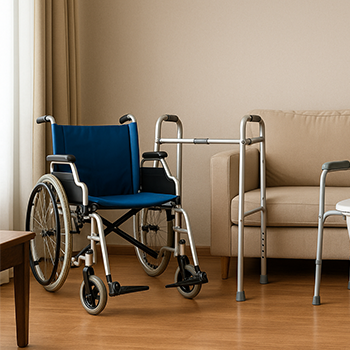
Appropriate balance and strengthening exercises can help older adults remain active. A physiotherapist can assess gait, suggest exercises and advise whether a walking stick or walker is suitable. The right mobility aid must be correctly fitted; borrowing an unsuitable device can create new risks.
Create a simple family response plan
Keep emergency contacts visible and make sure the older adult can reach a phone. Agree on regular check-ins without turning every activity into a restriction. If someone falls and has severe pain, a head injury, confusion or cannot get up, seek urgent medical help rather than forcing them to stand.
When professional assistance may help
Families balancing work and caregiving may need support with safe transfers, daily routines or supervised outings. A trained caretaker can help observe hazards and follow a care plan, but cannot replace a clinician's assessment. MobiCrew's Mumbai-focused assistance services may be worth exploring when choosing practical support for an older family member; confirm the precise service scope and staff qualifications before booking. References for external linking World Health Organization, Falls: https://www.who.int/news-room/fact-sheets/detail/falls
US National Institute on Aging, Preventing Falls and Fractures in Older Adults: https://www.nia.nih.gov/health/falls-and-falls-prevention/falls-and-fractures-older-adults-causes-and-prevention
Related
-
Where to Find Affordable Home Care Equipment in Mumbai for Elderly
-

Trusted Carers for the Elderly in Mumbai: Compassionate Care at Home
-
Caregiver for Elderly Mumbai: Personal Care, Companionship, and Medical Support
-
How Home Care Services Help Seniors Stay Safe and Independent at Home
-
Where Comfort, Safety and Compassion Meet
Frequently asked questions

Wet floors, loose rugs, clutter, poor lighting and unstable furniture are common environmental concerns.
No. Mobility aids should match the person's balance, strength and clinical needs.
They can be helpful in bathrooms and other transfer areas, but should be selected and installed properly.
Individualised strength and balance activity can support fall prevention; ask a qualified professional about suitability.
Check for injuries, seek urgent care for warning signs and arrange a review of possible causes.
Get more caregiving guidance like this
Add MobiCrew as a preferred source to see our latest eldercare and mobility articles first in Google.
Add as preferred source