




Can You Travel by Flight with a Folding Electric Wheelchair? Complete Guide
Travelling with a wheelchair used to feel complicated enough on its own. Add airports, airline rules, battery regulations, security checks, and long terminals into the mix, and many families simply avoid flying altogether.
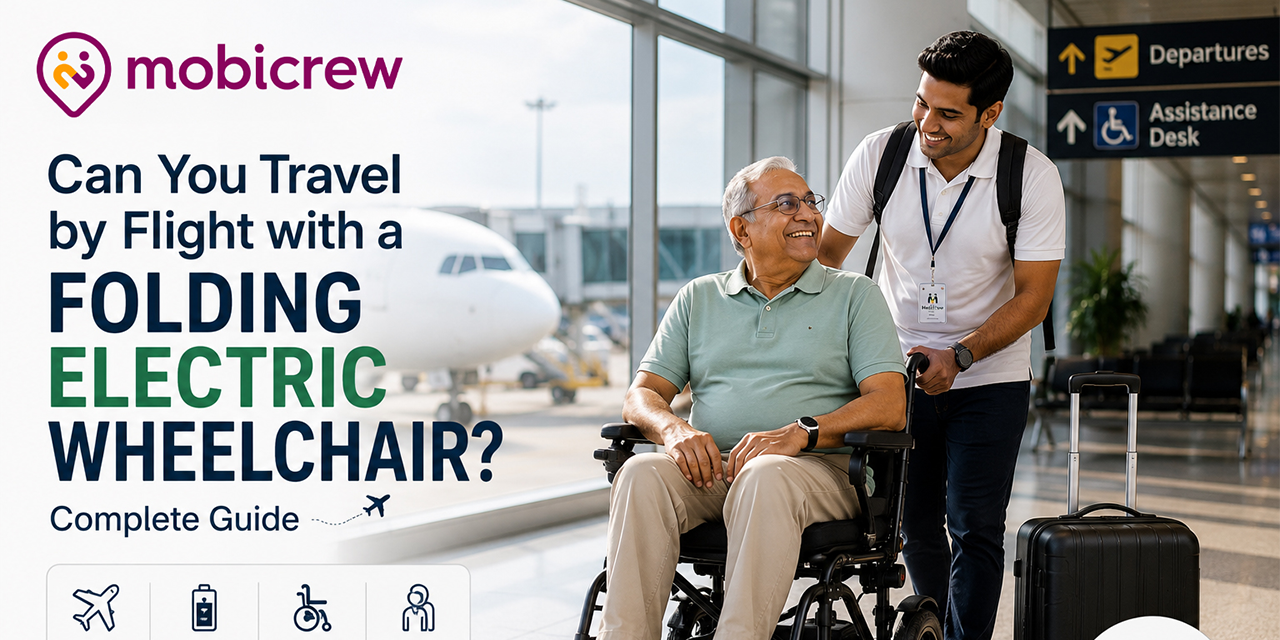
But things are changing.
Modern folding electric wheelchairs are now specifically designed for travel, and airlines across India have become far more prepared to accommodate passengers with mobility needs. The important part is understanding the rules before reaching the airport.
Because yes, in most cases, you absolutely can travel by flight with a folding electric wheelchair. You just need the right preparation.
Why folding electric wheelchairs are becoming popular
Traditional electric wheelchairs are often heavy, bulky, and difficult to transport. Folding electric wheelchairs changed that completely.
They are:
• Lighter and easier to store
• Compact enough for car travel
• Simpler to handle during airport transfers
• More practical for vacations and hospital visits
• Easier for caregivers and companions to manage
For seniors and individuals with mobility limitations, this creates something extremely valuable: flexibility.
Families no longer need to plan life entirely around accessibility limitations.
The first thing airlines check: battery type
When travelling by air, the biggest concern is not the wheelchair itself.
It’s the battery.
Most folding electric wheelchairs today use lithium-ion batteries, and airlines follow international safety rules regarding lithium batteries onboard aircraft. Air India, DGCA guidelines, and international airline policies all focus heavily on battery protection and watt-hour limits.
In general:
• Batteries under 300Wh are usually permitted
• Spare batteries often need airline approval
• Removable batteries may need to be carried separately in cabin baggage
• Airlines typically require advance notification before travel
Many travel-friendly wheelchairs are now specifically built to stay within airline-approved battery limits.
That’s why checking the battery specifications before you buy a folding electric wheelchair becomes extremely important.
Why advance airline approval matters
One common mistake people make is informing the airline too late.
Most airlines recommend notifying them at least 48 hours before departure if you’re travelling with a powered mobility device.
Usually, airlines will ask for:
• Wheelchair model details
• Battery type
• Watt-hour rating
• Dimensions and weight
• Whether the battery is removable
This process sounds technical, but it prevents confusion during check-in.
Some airports may also inspect the battery label physically, so carrying product specifications or photographs on your phone is always helpful.
Airports are becoming more accessible
Indian airports have improved significantly over the last few years.
Mumbai Airport, Delhi Airport, Bengaluru Airport, and several newer terminals now offer:
• Dedicated accessibility assistance
• Elevator access
• Wheelchair-friendly boarding support
• Priority security lanes in some cases
• Better washroom accessibility
Even Mumbai Metro connectivity to airport routes has improved urban mobility overall.
Still, airports can feel overwhelming, especially during long journeys, delays, or crowded travel hours.
That’s why many families now prefer having a travel companion or mobility support assistant during trips.
Where MobiCrew fits into travel support
This is where mobility assistance becomes genuinely useful beyond the wheelchair itself.
At MobiCrew, support is not limited to equipment alone.
Families often arrange trained companions for:
• Airport assistance
• Hospital travel
• Flight boarding support
• Managing luggage and movement
• Assistance during long terminals or waiting periods
• Support throughout the journey for elderly passengers
Because even when airports are accessible, travelling alone can still feel physically exhausting for seniors or wheelchair users.
Sometimes the biggest relief is simply knowing someone reliable is there throughout the process.
You can explore MobiCrew mobility products and travel-friendly solutions here:
https://mobicrew.com/products?&productCategory=1
A few practical travel tips people often forget
Frequent wheelchair travellers often recommend:
• Arriving early at the airport
• Carrying battery documentation physically
• Labelling detachable batteries clearly
• Informing airline staff politely but confidently
• Taking photographs of the wheelchair before check-in
Online communities discussing wheelchair travel also regularly mention how important airline communication is before the flight date itself.
These small preparations make the experience much smoother.
The bigger shift happening in mobility
The most encouraging part is that mobility-focused travel is slowly becoming normal rather than exceptional.
Airports, airlines, metros, and public spaces are adapting faster than before. Folding electric wheelchairs are becoming more travel-friendly. Families are more aware of accessibility options.
And importantly, people are beginning to travel again instead of staying restricted at home.
Because mobility is not only about movement. It’s about participation.
The ability to visit family, take vacations, attend important events, or simply experience the world with more comfort and confidence.
Related
-

Exploring Wheelchair-Accessible Beaches in India
-

Benefits of Using an Elderly Care App for Independent Living
-

Wheelchair Users and Ganesh Chaturthi: How Inclusive Are Mumbai’s Famous Pandals?
-

Saying Yes More Often: How Reliable Mobility Support Changes Daily Life
-

24/7 Health Service Providers in Mumbai: Emergency Care When You Need It
Get more caregiving guidance like this
Add MobiCrew as a preferred source to see our latest eldercare and mobility articles first in Google.
Add as preferred source