




At-Home vs. Clinic Physical Therapy in Mumbai: Which Is Right for You?
Anyone who's tried to schedule physiotherapy around Mumbai traffic knows the real cost isn't just money, it's the time and energy spent getting there. That's pushed a lot of families toward considering at-home sessions instead, but the right choice actually depends on what kind of recovery is happening.
What at-home physical therapy actually offers
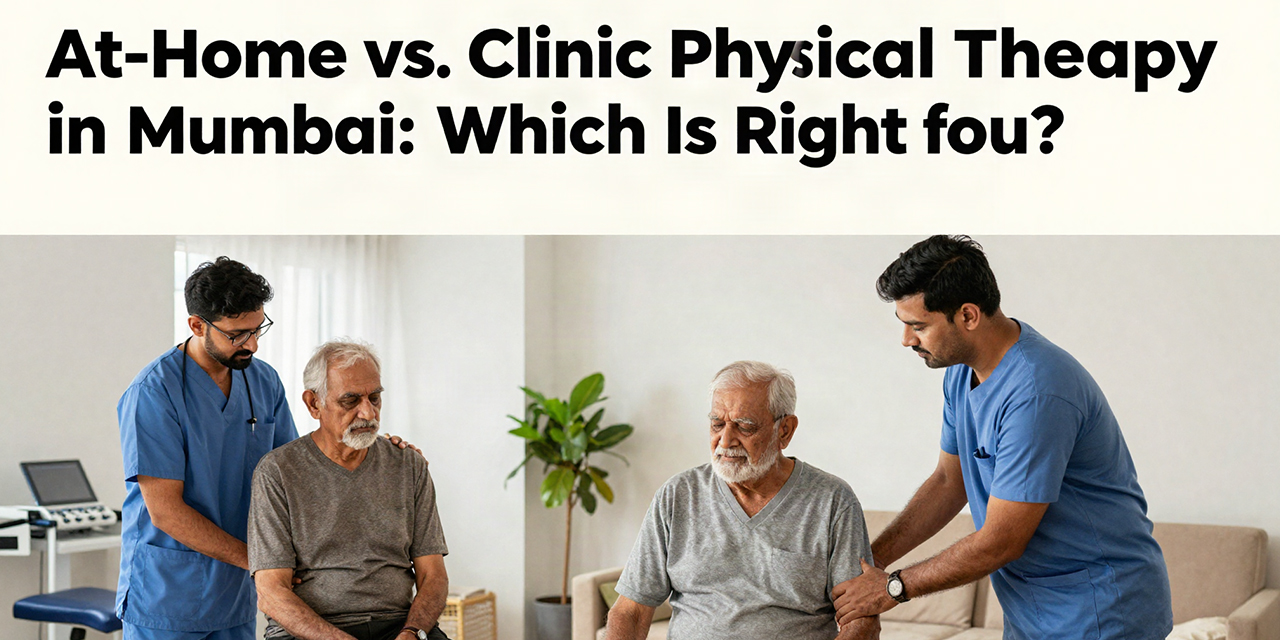
A physical therapist coming to your home means treatment happens in a familiar, comfortable environment, without the fatigue of travel beforehand or the wait once you arrive. For elderly patients especially, this matters. Getting to a clinic can involve stairs, traffic, and standing around, all of which are genuinely tiring before therapy has even started. At-home sessions also let a therapist see how someone actually moves through their real environment, and adjust the home setup itself for better safety, something a clinic visit can't offer.
There's also a practical safety angle. Home-based therapy reduces exposure to the kind of infection risk that comes with crowded waiting rooms, which matters more for patients with weaker immune systems after surgery or illness. And because sessions happen in a private, one-on-one setting, family members can be present, understand the exercises, and help keep up the routine between visits.
Where clinic-based therapy still wins
Clinics have equipment that simply can't be brought to a home. Advanced machines for gait training, resistance equipment, or specialised modalities used for certain injuries all require the clinic environment. For complex cases, spine surgery recovery, certain neurological conditions, or injuries needing intensive, equipment-heavy rehabilitation, a clinic is usually the better starting point, at least initially.
A clinic setting can also offer a more structured, distraction-free environment, which some patients genuinely respond better to, especially if the goal involves building toward specific performance benchmarks rather than general daily mobility.
Making the actual decision
The honest answer is that it depends on the condition, not on which option sounds more convenient. Straightforward post-surgical recovery, general mobility work, and care for elderly patients with limited ability to travel usually work very well at home. Complex rehabilitation requiring specific equipment or intensive supervision often benefits from at least some clinic-based sessions, sometimes alongside home visits for the parts of recovery that don't need special machinery.
It's worth having this exact conversation with the treating doctor or physiotherapist rather than deciding based on convenience alone. Many patients end up using a mix of both, clinic sessions early on when equipment matters most, shifting to at-home visits as recovery progresses and the focus moves toward consistency and daily function.
MobiCrew can help arrange a physical therapist in Mumbai for home visits, alongside broader support like mobility assistance and companionship for the rest of the recovery period.
Related
-

Benefits of Hiring a Companion for Elderly Care in Mumbai
-

Top Mistakes to Avoid When Hiring Home Care Providers
-

Best Apps for Senior Citizens to Stay Safe, Connected, and Independent
-

How Home Care Services Help Seniors Stay Safe and Independent at Home
-
More Than Care: The Power of Companionship in Mobility Support**
Frequently asked questions

Comfort, no travel fatigue, reduced infection exposure, one-on-one attention, and the ability for a therapist to assess and adapt your actual home environment for safety.
Pricing varies by provider and the complexity of care needed. It's worth comparing directly rather than assuming one option is automatically cheaper.
No. Conditions requiring specialised equipment, like advanced gait trainers or specific rehabilitation machinery, are usually better suited to a clinic, at least for part of the recovery.
Therapists typically bring portable tools and basic equipment, but larger, specialised machines available in clinics generally can't be replicated at home.
If your recovery involves complex surgery, neurological rehabilitation, or intensive equipment-based training, ask your doctor or physiotherapist whether clinic sessions should be part of the plan.
Get more caregiving guidance like this
Add MobiCrew as a preferred source to see our latest eldercare and mobility articles first in Google.
Add as preferred source