




International Day of Persons with Disabilities: Why Accessibility Must Become a Daily Commitment in Mumbai
Every year on 3 December, the world pauses for a moment to acknowledge something we should really be talking about every single day: the rights and dignity of persons with disabilities. The International Day of Persons with Disabilities is not just a date on the calendar. It is a reminder that accessibility is not charity. Inclusion is not optional. And equality cannot wait for special occasions.
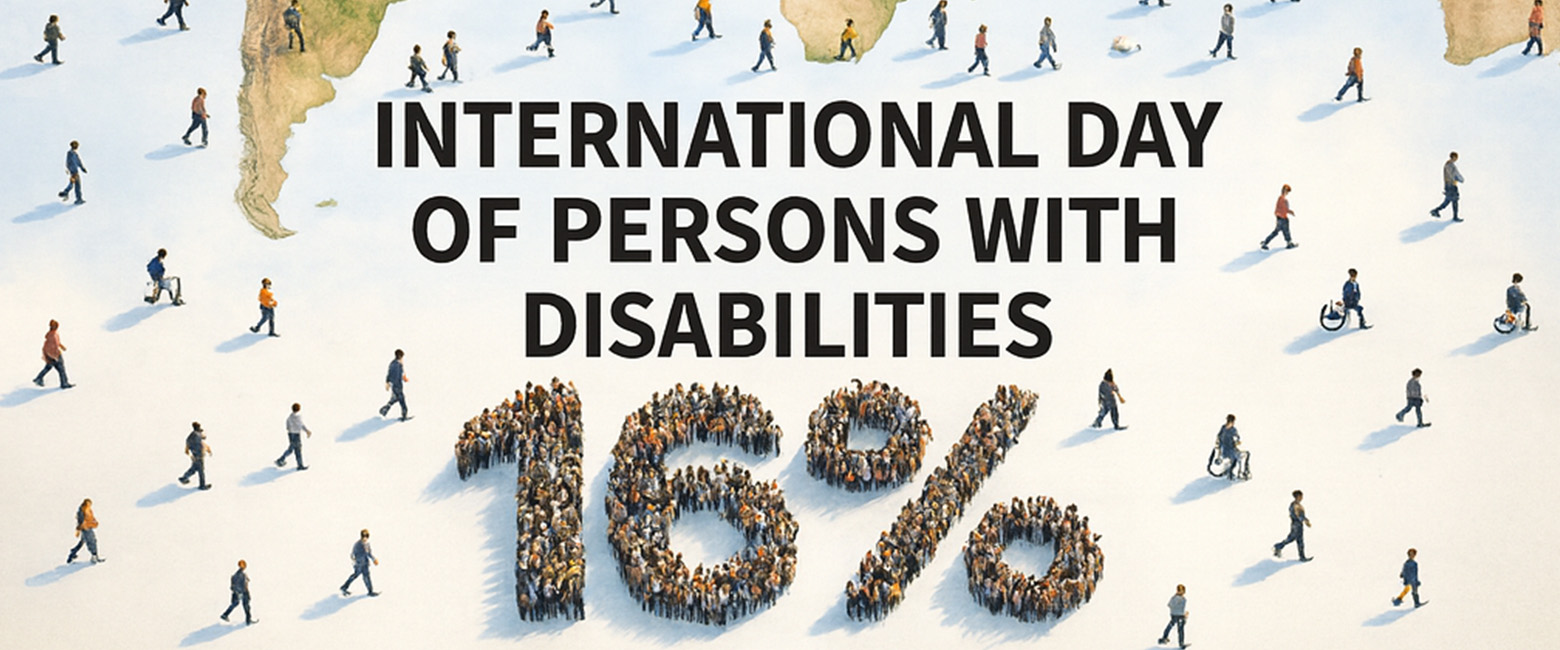
Globally, more than 1.3 billion people live with some form of disability — roughly 16 percent of the world’s population. That makes people with disabilities the world’s largest minority group.
Source: https://www.who.int/publications/i/item/9789240063600
This number becomes even more important when we realise how many remain excluded from basic mobility, healthcare, education, public spaces and employment because the world wasn’t built keeping them in mind.
And if there is one city that shows this contrast clearly, it’s Mumbai. The Indian Picture: A Large Population, Often Unseen
Official numbers in India estimate that around 2.2 percent of the population has a disability.
Source: https://pib.gov.in/Pressreleaseshare.aspx?PRID=1593253
But global comparisons tell a different story. If the WHO global estimate of 16 percent applied to India, the actual number would be far higher. Many people with age-related mobility limitations, chronic conditions or temporary disabilities are never counted. They don’t appear in datasets, but they exist in every building, every neighbourhood, and every family.
This gap between reported numbers and lived reality is exactly why accessibility cannot be something we remember once a year.
India’s Push Toward Accessibility: Progress, But Slow and Uneven
Over the last decade, India has initiated several reforms:
Accessible India Campaign (Sugamya Bharat Abhiyan)
This nationwide program aims to make buildings, transportation systems, and digital services universally accessible.
Information: https://en.wikipedia.org/wiki/Accessible_India_Campaign
Rights of Persons with Disabilities Act, 2016 (RPwD Act)
This law expanded the list of recognised disabilities and made accessibility a legal requirement in public buildings and services.
Accessible public transport upgrades
Newer metro lines, some railway stations, airports and public buses have introduced ramps, lifts, tactile flooring and reserved spaces.
These are meaningful steps, but the pace of change varies widely from one city to another, and often from one building to the next. Accessibility still depends heavily on individual initiatives rather than consistent systems.
Why Accessibility Must Be a Daily Effort — Not an Annual Reminder
Disability does not take a break 364 days of the year and reappear on December 3rd. People need access daily — to move, to work, to study, to shop, to attend a family function, or simply to go for a walk.
A city like Mumbai, with its narrow footpaths, steep entrances, crowded trains and uneven surfaces, magnifies the challenges. Something as simple as getting from home to the gate can feel like a full-day task.
Accessibility is not only about ramps and lifts. It’s about:
- Mobility
- Dignity
- Safety
- Opportunity
- The freedom to participate in society
And all of these are tied closely to how people move.
The Link Between Mobility and Inclusion
Mobility is the foundation of independence. When mobility is blocked, everything else becomes unreachable:
hospitals, workplaces, parks, events, even social connections.
This is why mobility support services matter. They bridge the gap between intention and action — especially for seniors, wheelchair users and people with temporary or long-term disabilities.
How MobiCrew Is Turning Accessibility Into Everyday Reality in Mumbai
MobiCrew has become one of the few services in Mumbai that treats accessibility as a daily responsibility, not a special gesture.
Here’s how they contribute:
Wheelchair Taxis and Assisted Transport
They provide wheelchair-accessible vehicles with trained staff who understand how to navigate Mumbai’s terrain safely.
Mobility Companions
Support for doctor visits, social outings, hospital procedures, events and everyday tasks — ensuring people are not trapped inside their homes.
Home Care and Mobility Equipment
Wheelchairs, walkers, commode chairs, and other aids delivered to your doorstep with guidance on what suits your home layout.
Support at Public Events
MobiCrew actively participates in making festivals, cultural programs and large gatherings more accessible for attendees who need mobility assistance.
More about their services:
https://www.mobicrew.com
MobiCrew shows that inclusion becomes real not by building ideal systems overnight, but by offering practical help that works today, tomorrow and every day after.
What Mumbai Must Embrace Going Forward
If Mumbai truly wants to call itself inclusive, accessibility must move beyond theory and become part of daily design:
- Ramps next to every staircase
- Wide, obstacle-free footpaths
- Wheelchair-friendly entrances in residential buildings
- Public transport that welcomes everyone
- Event organisers who plan for accessibility, not apologise for the lack of it
- Workplaces that recognise mobility needs as basic requirements
Cities grow through intention. And inclusion only grows when it becomes habit.
Final Thought
International Day of Persons with Disabilities is a reminder — a loud one — that accessibility is a shared responsibility. With one in six people globally living with disabilities, the question isn’t “should we do more?”
The question is:
“If not now, when?”
And “If not us, who?”
In Mumbai, services like MobiCrew show what inclusion looks like when put into practice — not once a year, but every single day
Related
-
Redefining Urban Mobility: The Rise of Accessible Transportation
-
Book Wheelchair Online in Mumbai: Fast, Affordable & Hassle-Free with MobiCrew
-
The New Era of Help for People with Disabilities: From Support to Strength
-
The Future of In-Home Care: How Apps Are Making Elderly Care More Accessible
-
From Injury to Recovery: The Importance of Sport Rehabilitation in Mumbai
-
Wheelchairs on Rent vs Purchase: Whats More Cost-Effective in Mumbai
-
Best Senior Citizen Caretaker Services in Mumbai for Safe and Comfortable Living
-
MobiCrew: Complete Guide to Health Service Provider in Mumbai - Services, Pricing & Phone Number